In Bhagavad Gita, Adhyaya 11 (Chapter 11), Verse 32, Lord Krishna reveals his divine cosmic form to Arjuna during the pivotal moment of the great war of Kurukshetra. This verse captures the profound essence of this divine revelation.
In this verse, Arjuna expresses his awe and fear upon witnessing the awe-inspiring cosmic form of Lord Krishna. He sees the Lord adorned with multiple mouths, eyes, and divine ornaments, exuding divine radiance and vastness beyond comprehension. Arjuna perceives the Lord’s form expanding in all directions, extending beyond the boundaries of time and space. Faced with this overwhelming sight, Arjuna feels a sense of trepidation and wonders about the purpose behind Krishna’s display of this wondrous cosmic form.
कालोऽस्मि लोकक्षयकृत् प्रवृद्धो लोकान्समाहर्तुमिह प्रवृत्तः।
ऋतेऽपि त्वां न भविष्यन्ति सर्वे येऽवस्थिताः प्रत्यनीकेषु योधाः॥
Transliteration:
kālo’smi loka-kṣhaya-kṛit pravṛiddho lokān samāhartum iha pravṛittaḥ
ṛite’pi tvāṁ na bhaviṣhyanti sarve ye’vasthitāḥ pratyanīkeṣhu yodhāḥ
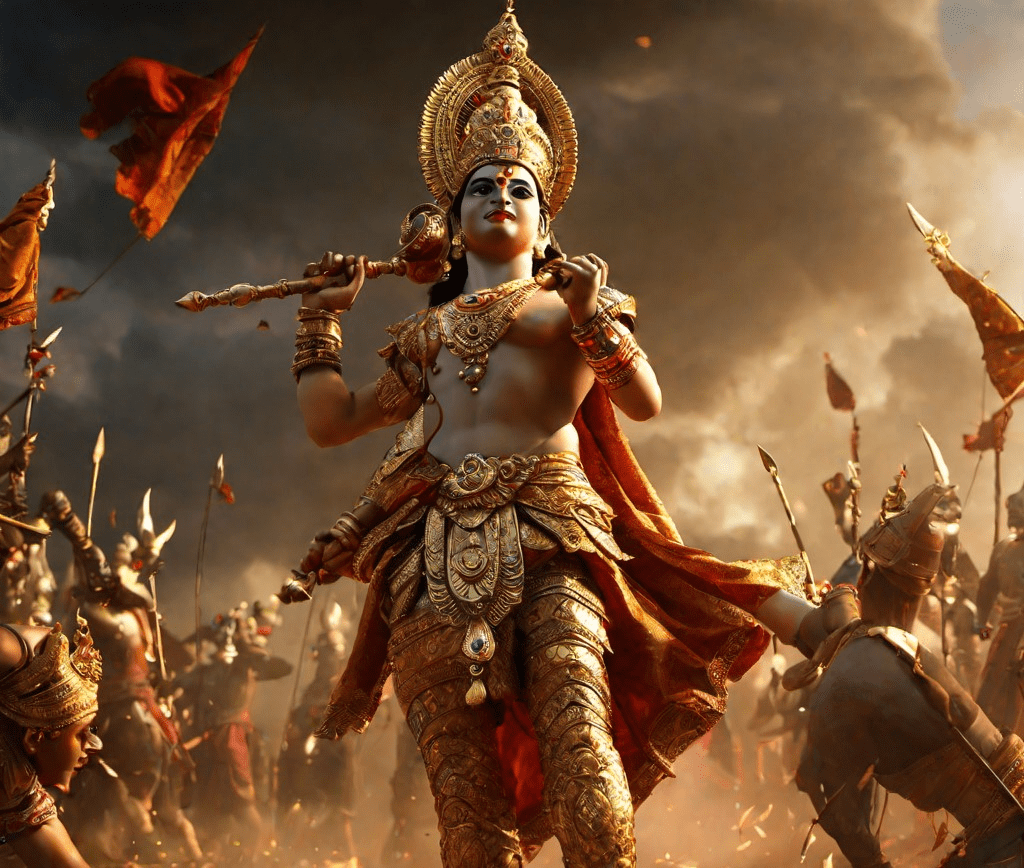
I am Kalah, filled with virtues. Similarly, the Ever-Eternal One, the World-Binder, the Destroyer, and the Enlightener, who has endured through ages, will personally engage in slaying the people on the battlefield, leading to the decay of the world. Except for you, Dharmaraja, and a few others, all the warriors from both rival armies will perish.
– Explanation –
I am Kaalah – embodying the elements of binding, killing, bestowing knowledge, and guiding with blessings. Endowed with the six qualities of complete opulence, I manifest as the Kalanamaka, bestowing actions of binding, killing, granting knowledge, and guiding in this world.”
Lokakshyakrit – When asked why he would endure violence, he responds with “Lokakshyakrit,” meaning that he has indeed come to this battlefield to bring an end to the world.
Pravriddha – “Pravriddha” refers to something that is eternally perfect and exists without a beginning or an end. In other words, it denotes a state of timeless and flawless existence, beyond the limitations of time and space. It implies an eternal and unchanging nature, free from the constraints of birth or death, and represents a state of absolute perfection. refers to something that is eternally perfect and exists without a beginning or an end. In other words, it denotes a state of timeless and flawless existence, beyond the limitations of time and space. It implies an eternal and unchanging nature, free from the constraints of birth or death, and represents a state of absolute perfection.
Rite api Tvam Lokan samahartum iha pravruttah – If you have the intention to slay the people on the battlefield, does that mean you would also be willing to kill the Pandavas? When asked this question, the answer would be “Rite api Tvam,” meaning “except you.” Here, the word “Api” signifies that all others, apart from the five Pandavas, Ashwatthama, Kritavarma, and Kripacharya, will be destroyed.
Pratyanikeshu – refers to the two armies that stand facing each other as rivals on the battlefield. It indicates the opposing forces that are ready to engage in a conflict or battle.
Ye Yodhaah Avasthitah – The warriors who are currently stationed on the battlefield.”
Na Bhaviṣhyanti Sarve – All of them will cease to exist.
Kannada – ಭಗವದ್ಗೀತೆ, ಅಧ್ಯಾಯ 11, ಶ್ಲೋಕ 32 ರಲ್ಲಿ, ಕುರುಕ್ಷೇತ್ರದ ಮಹಾಯುದ್ಧದ ಪ್ರಮುಖ ಕ್ಷಣದಲ್ಲಿ ಭಗವಾನ್ ಕೃಷ್ಣನು ಅರ್ಜುನನಿಗೆ ತನ್ನ ದೈವಿಕವಾದ ವಿಶ್ವರೂಪವನ್ನು ಹೊರಹಾಕುತ್ತಾನೆ. ಈ ಶ್ಲೋಕವು ಭಗವಂತನ ವಿಶ್ವರೂಪದ ಆಳವಾದ ಸಾರವನ್ನು ಸೆರೆಹಿಡಿಯುತ್ತದೆ.
ಈ ಶ್ಲೋಕದಲ್ಲಿ, ಭಗವಾನ್ ಶ್ರೀಕೃಷ್ಣನ ಅದ್ಭುತವಾದ ವಿಶ್ವರೂಪವನ್ನು ನೋಡಿದ ಮೇಲೆ ಅರ್ಜುನನು ತನ್ನ ವಿಸ್ಮಯ ಮತ್ತು ಭಯವನ್ನು ವ್ಯಕ್ತಪಡಿಸುತ್ತಾನೆ. ಅನೇಕ ಬಾಯಿಗಳು, ಕಣ್ಣುಗಳು ಮತ್ತು ದೈವಿಕ ಆಭರಣಗಳಿಂದ ಅಲಂಕರಿಸಲ್ಪಟ್ಟ ಭಗವಂತನನ್ನು ಅವನು ನೋಡುತ್ತಾನೆ, ದಿವ್ಯ ತೇಜಸ್ಸು ಮತ್ತು ಗ್ರಹಿಕೆಗೆ ಮೀರಿದ ವಿಶಾಲತೆಯನ್ನು ನೋಡುತ್ತಾನೆ. ಅರ್ಜುನನು ಭಗವಂತನ ರೂಪವನ್ನು ಎಲ್ಲಾ ದಿಕ್ಕುಗಳಲ್ಲಿಯೂ, ಸಮಯ ಮತ್ತು ಸ್ಥಳದ ಗಡಿಗಳನ್ನು ಮೀರಿ ವಿಸ್ತರಿಸುತ್ತಿರುವುದನ್ನು ಕಾಣುತ್ತಾನೆ. ಈ ಅಗಾಧವಾದ ದೃಶ್ಯವನ್ನು ನೋಡಿದ ಅರ್ಜುನನು ನಡುಗುತ್ತಾನೆ. ಆಗ ಕೃಷ್ಣನು ಈ ಅದ್ಭುತವಾದ ವಿಶ್ವರೂಪವನ್ನು ಪ್ರದರ್ಶಿಸಿದ ಉದ್ದೇಶದ ಬಗ್ಗೆ ಸ್ಪಷ್ಟಪಡಿಸುತ್ತಾನೆ.
ಕಾಲೋಽಸ್ಮಿ ಲೋಕಕ್ಷಯಕೃತ್ಪ್ರವೃದ್ಧಃ ಲೋಕಂ ಸಮಾಹರ್ತುಮಿಹ ಪ್ರವೃದ್ಧಃ |
ಋತೆಽಪಿ ತ್ವಾಂ ನ ಭವಿಷ್ಯಂತಿ ಸರ್ವೇ ಯೆಽವಸ್ಥಿತಾಃ ಪ್ರತ್ಯನೀಕೇಷು ಯೋಧಾಃ || ಭ.ಗೀತಾ – 11-32 ||
ನಾನು ಕಾಲನಾಗಿರುವೆನು. ಪೂರ್ಣಷಡ್ಗುಣಗಳಿಂದ ತುಂಬಿರುವೆನು. ಹಾಗೆಯೇ ಜಗತ್ತಿಗೆ ಬಂಧಕನು, ಸಂಹಾರಕನು, ಜ್ನಾನದಾತೃವು, ದೇಶಕಾಲಗಳಿಂದ ತುಂಬಿದ ಅನಾದಿ ನಿತ್ಯನು, ಲೋಕದ ಕ್ಷಯವನ್ನು ಊಂಟುಮಾಡುವುದಕ್ಕಾಗಿ ಯುದ್ಧಭೂಮಿಯಲ್ಲಿರುವ ಜನರನ್ನು ಪ್ರತ್ಯಕ್ಷವಾಗಿ ಸಂಹರಿಸಲು ಪ್ರವೃತ್ತನಾಗಿರುವೆನು. ನೀನು, ಧರ್ಮರಾಜ ಮುಂತಾದವರನ್ನು ಹೊರತಾಗಿ ಪರಸ್ಪರ ಪ್ರತಿಸ್ಪರ್ಧಿಯಾಗಿರುವ ಎರಡು ಸೇನೆಗಳಲ್ಲಿರುವ ಎಲ್ಲಾ ಯೋಧರು ಇನ್ನು ಮುಂದೆ ಇಲ್ಲವಾಗುತ್ತಾರೆ.
ವಿವರಣೆ – ’ಕೋ ಭವಾನ್” ಎಂಬ ಅರ್ಜುನನ ಪ್ರಶ್ನೆಗೆ ಕೃಷ್ಣನು ತನ್ನ ಗುಣಗಳನ್ನು ಹೇಳುವ ಮೂಲಕ ವಿವರಿಸುತ್ತಾನೆ.
ಕಾಲಃ ಅಸ್ಮಿ – ಕಲ ಎಂಬ ಧಾತುವು ಬಂಧನ, ಸಂಹಾರ, ಜ್ನಾನ, ಓಡಿಸುವಿಕೆ, ಅಭೀಷ್ಟಗಳನ್ನು ನೀಡುವುದು ಎಂಬರ್ಥಗಳಲ್ಲಿದೆ. ಪೂರ್ಣವಾದ ಐಶ್ವರ್ಯವೇ ಮುಂತಾದ ಆರು ಗುಣಗಳಿಂದ ಕೂಡಿರುವವನು , ಈ ಲೋಕಕ್ಕೆ ಬಂಧನ, ಸಂಹಾರ, ಜ್ನಾನ, ಓಡಿಸುವುದು ಮುಂತಾದ ಕರ್ಮಗಳನ್ನು ನೀಡುವುದರಿಂದ ಕಾಲನಾಮಕನಾಗಿರುವೆನು.
ಲೊಕಕ್ಷಯಕೃತ್ – ಏಕೆ ಉಗ್ರರೂಪವನ್ನು ತಾಳಿರುವೆ ಎಂಬ ಪ್ರಶ್ನೆಗೆ ಉತ್ತರವಾಗಿ “ಲೊಕಕ್ಷಯಕೃತ್” ಎಂದು ಹೇಳುತ್ತಾನೆ. ಲೋಕದ ಸಂಹಾರ ಮಾಡಲು ಸಾಕ್ಷಾತ್ತಾಗಿ ಈ ಯುದ್ಧರಂಗಕ್ಕೆ ಬಂದಿದ್ದೇನೆ ಎಂದು ಅರ್ಥ.
ಪ್ರವೃದ್ಧಃ – ದೇಶಕಾಲಗಳಿಂದ ಪರಿಪೂರ್ಣನು ಅಥವಾ ಆದಿ ಮತ್ತು ಅಂತ್ಯ ಇಲ್ಲದವನು ಎಂದರ್ಥ.
ಋತೇಽಪಿ ತ್ವಾಂ ಲೋಕಾನ್ ಸಮಾಹರ್ತುಂ ಇಹ ಪ್ರವೃತ್ತಃ – ಯುದ್ಧರಂಗದಲ್ಲಿರುವ ಜನರನ್ನು ಸಂಹರಿಸಲು ಪ್ರವೃತ್ತನಾಗಿರುವೆ ಎಂದಾದರೆ ಪಾಂಡವರನ್ನು ಕೂಡ ಸಂಹರಿಸಲು ಪ್ರವೃತ್ತನಾಗಿರುವೆಯೊ? ಎಂದರೆ ಅದಕ್ಕೆ ಉತ್ತರವಾಗಿ “ಋತೇಽಪಿ ತ್ವಾಂ” ಎಂದು ಉತ್ತರಿಸುತ್ತಾನೆ. ನಿನ್ನನ್ನು ಹೊರತುಪಡಿಸಿ ಎಂದರ್ಥ. ಇಲ್ಲಿ “ಅಪಿ”ಶಬ್ದದ ಮೂಲಕ ಪಂಚ ಪಾಂಡವರು, ಅಶತ್ಥಾಮ, ಕೃತವರ್ಮ, ಕೃಪಾಚಾರ್ಯ ಇವರನ್ನು ಬಿಟ್ಟು ಉಳಿದ ಎಲ್ಲರನ್ನೂ ನಾಶ ಮಾಡುತ್ತೇನೆ ಎಂದರ್ಥ.
ಪ್ರತ್ಯನೀಕೇಷು – ಪರಸ್ಪರವಾಗಿ ಪ್ರತಿಸ್ಪರ್ಧಿಗಳಾಗಿ ನಿಂತಿರುವ ಎರಡು ಸೇನೆಗಳಲ್ಲಿ.
ಯೇ ಯೋಧಾಃ ಅವಸ್ಥಿತಾಃ – ಯಾವ ಯೋಧರು ಈ ರಣಭೂಮಿಯಲ್ಲಿ ನಿಂತಿದ್ದಾರೋ.
ತೇ ನ ಭವಿಷ್ಯಂತಿ – ಅವರೆಲ್ಲರೂ ಮುಂದೆ ಇಲ್ಲವಾಗುತ್ತಾರೆ.

 Anu-Chintanam
Leave a comment